Safety
Buying chargers safely in the UK
How to avoid fake and unsafe chargers and power banks. Covers what UKCA and CE marks mean, warning signs to look for when buying online, and how to charge safely, from UK safety bodies and Apple.
Checked against sources 15 October 2026
Why it matters
USB chargers sold in the UK must meet the Electrical Equipment (Safety) Regulations 2016, Electrical Safety First (ESF) says. Not everything sold online does. ESF warns that substandard or counterfeit chargers from third-party sellers “may present a higher risk of exploding or catching fire”. It also says fakes can use “imagery taken from official product sites, fake official safety marks and believable pricing”.
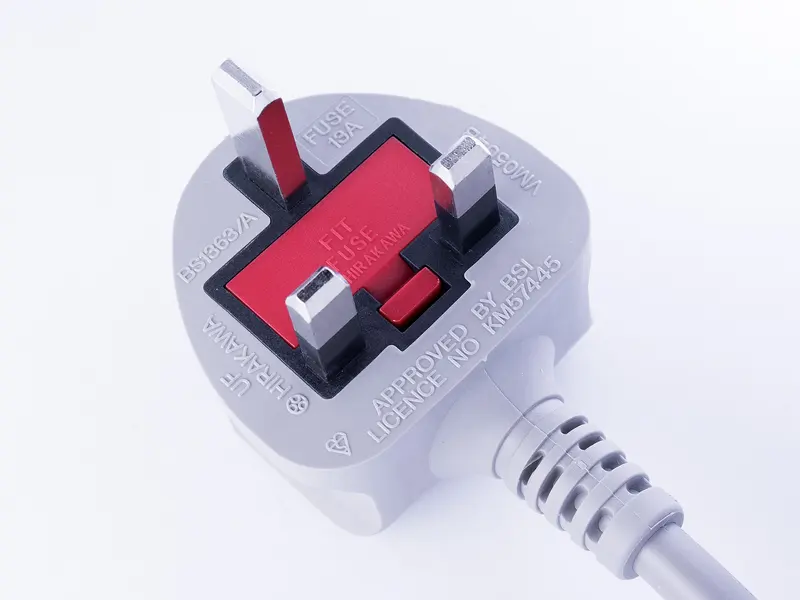
The Office for Product Safety and Standards (OPSS) publishes product safety reports on GOV.UK. In July 2025 it reported a counterfeit “Apple”-branded USB-C power adapter as a serious risk of fire and electric shock, because its plug pins didn’t meet BS 1363, the UK plug standard. The import was rejected at the border. In August 2026 it reported a 20W fast charger as a high risk of electric shock for the same plug problem. You can search OPSS reports for “USB charger”.
Before you buy
From ESF and GOV.UK’s staying safe guidance:
- Buy from a reputable retailer or the brand’s own store. On Amazon, check whether the item is sold by Amazon, the brand, or a third-party seller, and research that seller.
- Check who the seller is: their name, location, how long they’ve been selling, and detailed reviews, including negative ones.
- Be wary of sellers outside the UK. GOV.UK warns their products may not be made or labelled to UK safety law.
- Look for warning signs: no safety markings, unclear instructions or warnings, or no manufacturer name and address.
- Don’t rely on the photos or the price. ESF notes that fakes often use photos copied from official product sites and prices that look believable.
UKCA and CE marks
GOV.UK says the UK “continues to recognise the CE marking, alongside or in place of the UKCA marking”, for products sold in Great Britain. A charger may show CE, UKCA, both, or UKNI with CE. These marks are the maker’s own declaration that the product meets the rules, not a test by an independent lab. A missing mark is a warning sign. A mark alone doesn’t prove a charger is genuine.
Using chargers safely
- Don’t cover chargers or charge devices under pillows or bedding. The London Fire Brigade warns against using a laptop power lead in bed. Apple says not to sleep on a charging device or adapter.
- Keep Mac adapters ventilated. Apple advises against leaving them on a sofa, thick carpet, bedding or a pillow.
- Don’t use damaged cables or chargers, and don’t charge when moisture is present. Apple says this “can cause fire, electric shock, injury”.
- Overnight charging: ESF advises not charging overnight or while you’re out, and the London Fire Brigade says it’s best not to leave a phone plugged in overnight.
- Unplug immediately if you notice odd smells, sparking, smoke, swelling, cracks or damage, then contact the retailer or maker. If a battery swells, stop charging, turn the device off and don’t try to open it.
- Register your charger with the maker so you hear about any recalls.
Third-party chargers are fine if they’re safe
Apple says third-party adapters are fine if they meet safety standards. It also warns that adapters that don’t “could pose a risk of death or injury”. For iPhone it allows “Made for iPhone” or other third-party cables and adapters that comply with USB 2.0 or later and with safety standards. The brands we list are well-known makers selling under their own names. Even so, check the seller on Amazon before you buy.
Browse chargers or read how fast your device can charge.
Sources checked 15 October 2026
- Electrical Safety First – Electrical safety advice for USB chargers electricalsafetyfirst.org.uk
- Electrical Safety First – The dangers of online marketplaces electricalsafetyfirst.org.uk
- GOV.UK – Consumer products: staying safe gov.uk
- GOV.UK – Placing UKCA or CE marked products on the market in Great Britain gov.uk
- GOV.UK (OPSS) – Product Safety Alerts, Reports and Recalls gov.uk
- GOV.UK (OPSS) – Product Safety Report: Counterfeit “Apple” branded USB-C Power Adapter (2507-0047) gov.uk
- GOV.UK (OPSS) – Product Safety Report: EGTech 20W Fast Charger (2608-0040) gov.uk
- London Fire Brigade – Batteries and chargers london-fire.gov.uk
- Apple Support – About Apple USB power adapters support.apple.com
- Apple Support – Important safety information for iPhone support.apple.com
- Apple Support – If your USB-C power adapter isn’t charging your Mac laptop support.apple.com